Project Video
Robotics
[JetMax Robotic Arm Vision-Based Name Writing System]
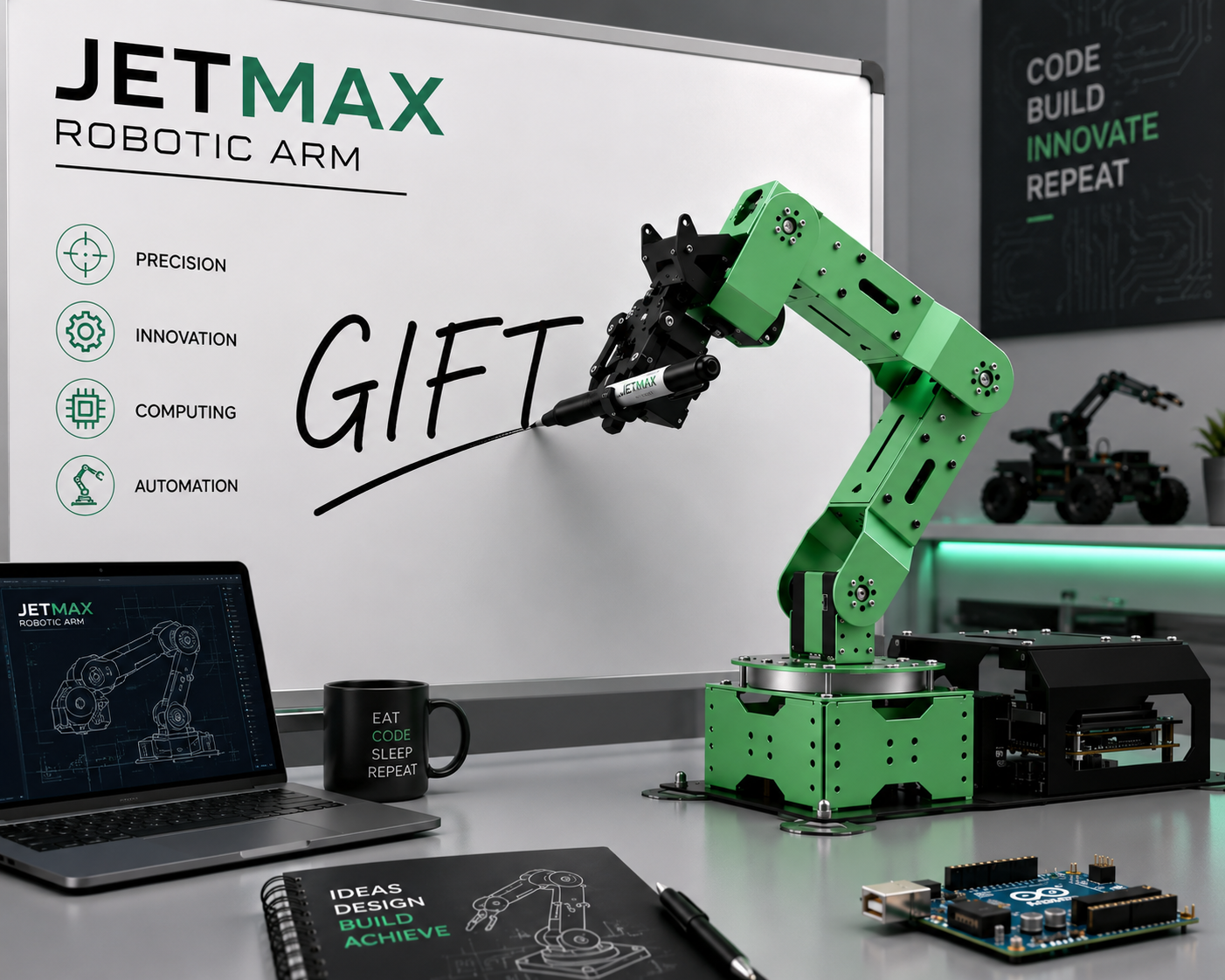
An AI-powered JetMax robotic arm system that uses a camera to recognize a person’s face and automatically writes their name using robotic arm motion control.
Overview
This project implements a vision-based robotic system using the JetMax robotic arm that can identify a person through a camera and write their name automatically. It combines face recognition, computer vision, and robotic motion control to create an intelligent human–robot interaction system.
When a known face is detected, the system retrieves the associated identity and triggers the robotic arm to write the person's name on a surface using precise motion planning.
How It Works
The system continuously captures live video using a camera placed in front of the workspace. Each frame is processed using face detection and recognition algorithms to identify individuals from a trained dataset.
Once a face is recognized, the system maps the detected identity to a stored name label.
The JetMax robotic arm then executes a pre-defined writing trajectory for each character of the name. These trajectories are generated using inverse kinematics to ensure smooth and accurate pen movement.
The writing process includes:
- Face detection in real time
- Face recognition using trained dataset or embedding model
- Name retrieval from identity mapping
- Character-by-character writing path generation
- Robotic arm motion execution
Features
- Real-time face detection and recognition
- Identity-to-name mapping system
- Robotic arm automated writing system
- Precision motion control using inverse kinematics
- Camera-based human identification
- Dynamic writing of different names
- Real-time AI-to-robot interaction
- Automated personalized response system
Technologies Used
- Python
- OpenCV
- Face Recognition (Haar Cascades / Dlib / Deep Learning models)
- JetMax Robotic Arm
- NumPy
- Camera Vision System
- Inverse Kinematics
- Linux (Ubuntu)
- Robotic Motion Control Systems
Applications
- Human–robot interaction systems
- Personalized robotics demonstrations
- Smart classroom or attendance systems
- AI-driven identity-based automation
- Educational robotics projects
- Smart office or reception systems
- Research in social robotics
Learning Outcomes
This project improved skills in:
- Face detection and recognition systems