Project Video
Robotics
[TurtleBot3 Follower]
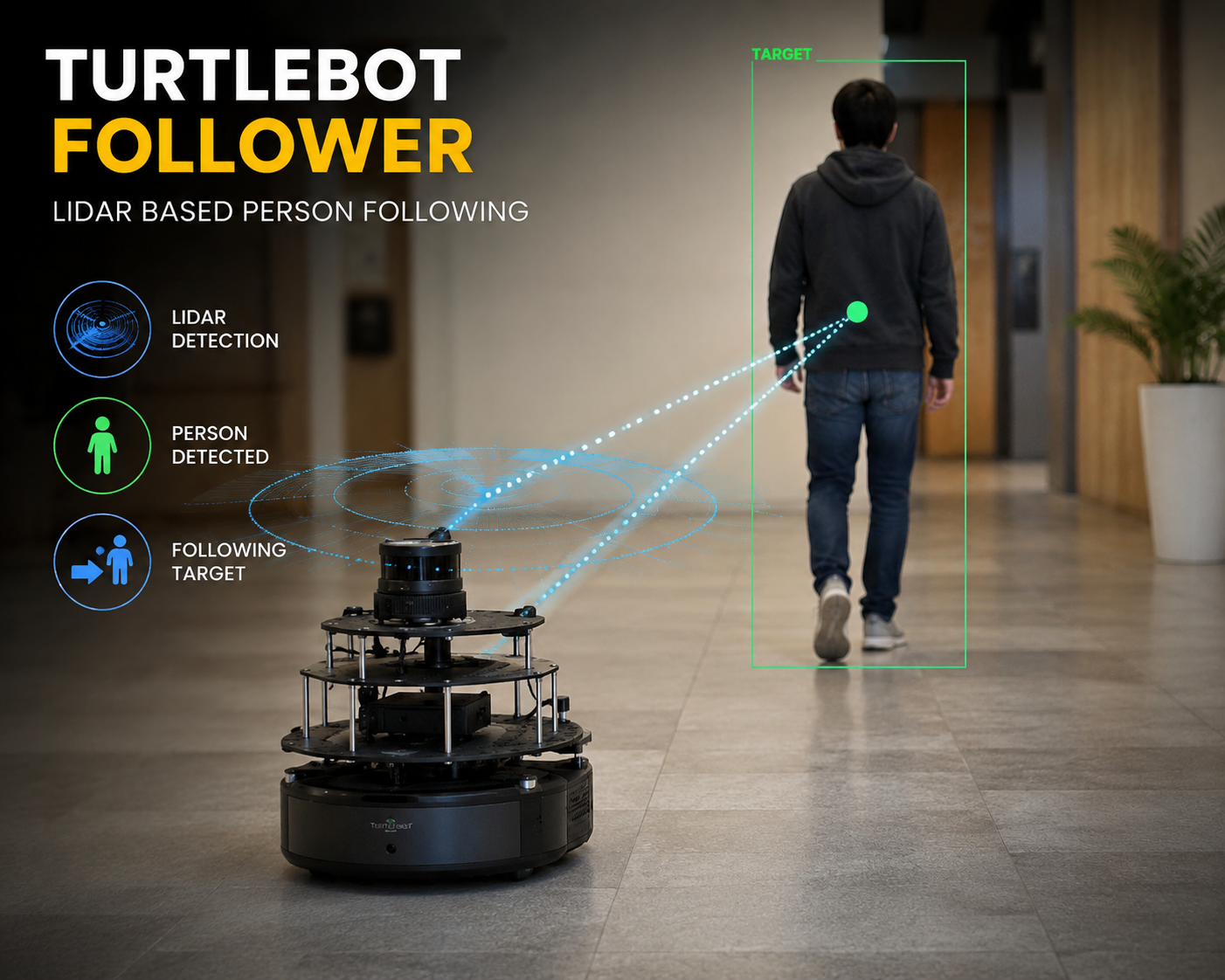
An autonomous TurtleBot robot that uses LiDAR-based object detection and obstacle avoidance to identify and follow the closest person in real time.
Overview
This project is an autonomous mobile robotics system developed using the TurtleBot platform. The robot uses LiDAR sensor data to detect nearby objects, identify the closest target, and continuously follow that target while avoiding obstacles in real time.
The system was designed for indoor autonomous navigation and human-following applications. By processing live LiDAR scan data, the robot determines the position and distance of surrounding objects, selects the nearest object (typically a person), and dynamically adjusts its movement to maintain smooth and safe tracking.
Features
- Real-time LiDAR-based object detection
- Autonomous human/object following
- Dynamic obstacle avoidance
- Indoor autonomous navigation
- Continuous distance and direction tracking
- ROS-based robot control system
- Smooth movement and motion adjustment
How It Works
The TurtleBot continuously scans its environment using a LiDAR sensor. The incoming scan data is processed to identify surrounding objects and calculate their relative distance from the robot.
The robot selects the closest detected object as the tracking target and calculates its movement direction. Motion commands are then generated to allow the TurtleBot to follow the target while maintaining a safe distance.
Obstacle avoidance logic is integrated into the navigation system to ensure the robot can safely maneuver around walls, furniture, and other obstacles without collisions.
Technologies Used
- ROS / ROS2
- TurtleBot3 Burger
- Python
- LiDAR Sensor
- Ubuntu Linux
- Gazebo Simulation
- RViz
- Navigation Stack
- PID Motion Control
Applications
- Human-following robots
- Autonomous indoor delivery systems
- Smart assistance robots
- Warehouse robotics
- Research and educational robotics
- Service robot navigation systems
Learning Outcomes
This project strengthened skills in:
- Mobile robotics
- Autonomous navigation
- ROS development
- Sensor data processing
- Real-time robotic control
- LiDAR perception systems
- Obstacle avoidance algorithms
- Robot motion planning
Future Improvements
- Person identification using computer vision
- Multi-object tracking
- Voice command integration